The Birthplace of Trick-shots — Dude Perfect

As you may know, or maybe not, there exists a subculture to every sport, trick-shots. Many may wonder where this obsession has come from, in my opinion the YouTube channel “Dude Perfect” is the birthplace of the modern trick-shot.

Dude Perfect is a group of six friends: Coby Cotton, Cory Cotton, Garrett Hilbert, Cody Jones, and Tyler Toney. They met while rooming together at Texas A&M University in 2008. In 2009 they recorded a video of them playing basketball. However, this was no ordinary basketball game, they were shooting shots from across the yard and off the roof. The video blew up.

They continued to get more creative by pulling off more shots and trying out other sports. They would mix sports like baseball and basketball together. As the group started to gain notoriety, they started to get requests from companies to sponsor videos. This is when they realized that this could be a business. The guys branded the name Dude Perfect and have been business partners ever since. The group has done deals with Nerf and have filmed countless sponsored videos.

Dude Perfect has also released multiple apps that allow players to make virtual trick shots as members of the group. With over 40 million subscribers, the group is one of the top 10 biggest channels on YouTube and have changed sports forever.


David Dobrik & Clickbait

David Dobrik began his rise to fame on the 6-second video app, Vine. While Vine has since died, (see my article on why Vine failed here) David has continued to flourish through his successful YouTube vlogs. Unlike most vloggers who document their lives in creative ways, David relies heavily on comedy for his vlogs to be entertaining. He records the funny antics of his friend group, known by fans as “Vlog Squad,” and compiles it all into four minute and twenty second videos. David and his friends have admittedly used scripted scenes but they are combined with other unscripted clips so that it is hard to tell and still funny.

David has also admitted to relying heavily on click bait for his success. Click bait is defined on Google as, “internet content whose main purpose is to attract attention and encourage visitors to click on a link to a particular web page.” Basically using exciting titles and exaggerated thumbnails to get the attention of people scrolling through YouTube. David has embraced his use of click bait so much that he even sells clothing with the words “CLICK BAIT” on it.

clickbait
Clickbait merch from David Dobrik

David continues to post his comedic vlogs twice a week and I would highly recommend watching one of his videos for a guaranteed good laugh.

SmarterEveryDay

SmarterEveryDay is a channel ran by Destin Sandlin, a rocket engineer that graduated from the University of Alabama Huntsville. Destin makes videos to help educate others about the science that happens everyday. His explanations provide a perspective that many people have never had when looking at life. From explaining all the physics that goes into flying a helicopter to analyzing how a hockey slap shot works, Destin answers all the questions we didn’t know we had.

Destin posted his first video in 2007 to explain to his friends how a rocket can be used to start a bonfire. He got so much positive response for his teaching style in the video that he decided to keep posting. He has now posted over 200 videos covering numerous different topics. He has been recognized all over the world for his ability to make complex science topics fun to learn about. In 2016, Destin was given the opportunity to interview President Obama as part of a YouTube series. SmarterEveryDay is by far one of the most educational channels on YouTube and the unique teaching style has yet to replicated by any other channel on the site.

One of his most recent videos explains how whips work and provides a good example of how he is able to go into such depth with the topics he covers. Please check it out if you have the time.


The YouTube Channel Based Around a Mediocre Jim Carrey Movie — Yes Theory

In the movie Yes Man featuring Jim Carrey, a man starts saying “yes” to everything even if he doesn’t want to. The YouTube channel Yes Theory follows this principle of saying yes to things that take you outside of your comfort zone. They promote their message through videos where they challenge themselves or strangers to do something crazy and wildly outside their comfort zone. For example, here is a video where they challenged strangers to go skydiving on the spot.

Originally the group started as four friends Ammar, Thomas, Matt and Derin who met in Montreal, Canada in the summer of 2015. They started making videos to spread their message and never stopped. Today they live together in Venice Beach, California and have over 3.2 million subscribers. Recently they collaborated with Will Smith to pull off an epic stunt where they bungee jumped out of a helicopter over the Grand Canyon.

They have also started a clothing brand known as Seek Discomfort and have been very successful. The group has been very open about their struggles to stay committed to such a demanding message but their future is bright. If you haven’t already, check out some of their videos, you won’t regret it.

All information about Yes Theory in this post came from a video they posted titled Finally telling the story of HOW WE MET.

Casey Neistat’s Rise to Fame

Casey Neistat is now well known as a YouTuber with over 10 million subscribers. He is most famous for his daily vlog series which started in 2015; however, Casey started creating long before 2015. He was born March 25th, 1981 in Connecticut. Casey had a hard time in school and always got in a lot of trouble. When he was seventeen he had a kid, Owen Neistat, with his girlfriend. Shortly after he dropped out of high school to work full time as a dish washer. When Casey took a trip with his girlfriend and Owen to visit his older brother, Van Neistat, in New York City, Casey discovered film making for the first time. He decided that once he saved up enough money he would move to NYC to be a film maker. However, when Casey and his girlfriend split up, he decided to move to the city immediately. Casey worked a variety of jobs while creating short videos and films on the side with Van. Casey’s first real success came when a video he made called “IPod’s Dirty Secret” exploded on the internet.

ipod's dirty secret
IPod’s Dirty Secret

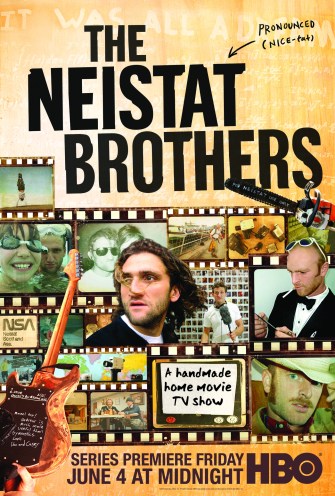
This was the first time other people started to watch Casey and his brother’s films. Eventually Casey and Van were offered the opportunity to create a short tv series which they sold to HBO for just under $2 million. HBO premiered The Neistat Brothers for the first time in 2010.

neistat bros.jpg
Casey and Van’s show which premiered on June 4th, 2010

Casey and Van took different creative paths after the tv show and after directing a few small movies, Casey decided to focus on YouTube in 2014. Casey’s cinematic approach to creating videos was unique, fresh, and ultimately changed YouTube in a large way. Today a majority of the popular vloggers and creators on YouTube have a heavy focus on cinematic shots and transitions.

All information about Casey used in this blog was found in video he created, definitely worth watching if you have the time: https://youtu.be/V6Y-ahQFQDA

Why Did Vine Die If Everyone Loved It?

I feel like anytime I go on YouTube or Instagram I see a million reposts of old Vines. So why did Vine die if everyone loved it? In short, Vine failed to adapt to a market with more video apps; however, there is more to the story.

27-vine-death.w700.h700
http://nymag.com/intelligencer/2016/10/vine-star-logan-paul-and-teens-talk-about-the-death-of-vine.html

Vine was founded in June 2012 and bought by Twitter for $30 million in October of the same year. Vine was never meant to be the huge creative platform it became. Its creators thought that the app would be used to share short videos between friends of life’s small moments. For example, someone blowing out candles on a birthday cake or family gathered at the table for Thanksgiving. Fortunately, people took the app as what writer of  the article “Why Vine Died”, Casey Newton, described as a “creative challenge.” Vine offered a unique test for creators to make an entertaining video that was only six seconds long. As the app grew in popularity, so did its most famous creators. These creators were known as Viners, many of whom are still prominent Internet stars today. Among these stars are names like David Dobrik, Logan Paul, Jake Paul, Lele Pons, King Bach, etc. Vine peaked in 2014 with a study reporting that 3.64% of all Android users opened Vine at least once a month. Despite the peak in 2014, Vine saw its first signs of competition when Instagram introduced the ability for users to post 15 second videos in June of 2013. Vine failed to make any significant changes to keep users from switching to the easier and longer format of Instagram. By 2016, Snapchat and Instagram had taken over the short video marketplace. Many Viners transitioned to Instagram where they would be paid thousands of dollars by companies to make sponsored videos. Without any unique content creators, Vine became a stale platform and in December of 2016 Twitter announced that the app would be turned into Vine Camera, with the six second videos being uploaded straight to Twitter.

RIP Vine. Gone but not forgotten xoxo.

Click this link to view the article used for research